
40.00€
In stock
Portugal - envio desde 2,35€
Rest of the world - calculated at checkout
View shipping details
100% secure checkout
14-day hassle policy
We're here to help
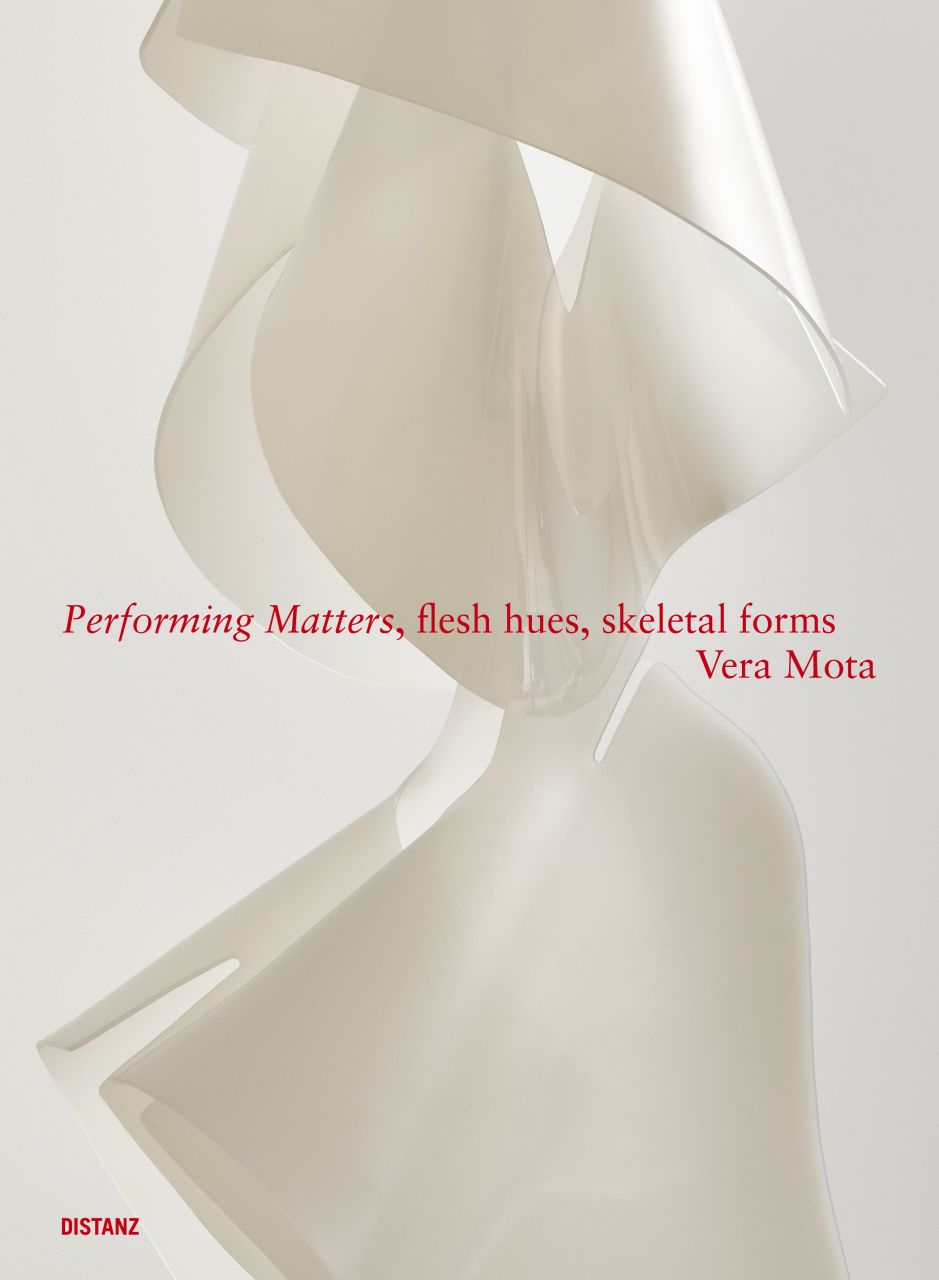
“Performing Matters, Flesh hues, Skeletal Forms” is the first monograph on Vera Mota, offering a comprehensive look at the last decade of her work. Her practice explores the physical, tactile, and conceptual possibilities of distinct material bodies — including her own. The body becomes an indispensable agent, both medium and subject, imprinting its gestures and movements while amplifying the voice of other matters. Working across sculpture, drawing, installation, and performance, Mota investigates how the body acts, functions, or is represented, probing the possibilities of an economy of presence.
As Philippe Vergne writes, Vera Mota’s diagrammatic work stages such dislocations and dismemberment of bodies under attack or subjected to self-dismantlement and barely held together. It might be the human body, the physical body. It could also be the small societies she organises in her installations and displays, pointing to communal bodies, social bodies, political bodies, democratic bodies, and migrating bodies of all kinds — all bodies that continue to be dismantled if they do not conform.
Featuring a foreword by Merle Radtke, essays by Philippe Vergne and André Barata, and a conversation with Barbara Piwowarska, this book offers a rich entry point into Vera Mota’s artistic practice.
Distanz
Distanz
“Performing Matters, Flesh hues, Skeletal Forms” is the first monograph on Vera Mota, offering a comprehensive look at the last decade of her work. Her practice explores the physical, tactile, and conceptual possibilities of distinct material bodies — including her own. The body becomes an indispensable agent, both medium and subject, imprinting its gestures and movements while amplifying the voice of other matters. Working across sculpture, drawing, installation, and performance, Mota investigates how the body acts, functions, or is represented, probing the possibilities of an economy of presence.
As Philippe Vergne writes, Vera Mota’s diagrammatic work stages such dislocations and dismemberment of bodies under attack or subjected to self-dismantlement and barely held together. It might be the human body, the physical body. It could also be the small societies she organises in her installations and displays, pointing to communal bodies, social bodies, political bodies, democratic bodies, and migrating bodies of all kinds — all bodies that continue to be dismantled if they do not conform.
Featuring a foreword by Merle Radtke, essays by Philippe Vergne and André Barata, and a conversation with Barbara Piwowarska, this book offers a rich entry point into Vera Mota’s artistic practice.